Understanding How Auctions Work

Every auction follows the same basic principle: interested buyers compete by placing bids, and the highest accepted offer usually wins. However, the rules, costs, and bidding process can vary depending on the type of auction and the items being sold.
Different Types of Public Auctions
Public auctions can involve antiques, household contents, property, vehicles, business equipment, and many other items. Some are held on behalf of private sellers, while others deal with estate clearances, liquidations, or repossessed goods. Each auction house sets its own conditions, including registration requirements, bidding increments, payment deadlines, and collection arrangements. Reading these terms before bidding helps prevent unexpected fees or practical problems after the sale.
Essential Auction Terms for Beginners
Auction catalogues and condition reports often contain words that may be unfamiliar to new bidders. A reserve price is the minimum amount a seller is prepared to accept, while an estimate is the auctioneer’s expected selling range rather than a guaranteed value. The hammer price is the winning bid announced when the auctioneer closes the lot. Buyers should remember that additional charges, including a buyer’s premium and applicable taxes, may be added to this amount.
Online and In-Person Bidding
In-person auctions allow buyers to inspect the atmosphere of the sale and follow bidding directly from the room. Online auctions provide broader access and make it possible to bid from another town or country. Both formats have advantages, but online buyers may have less opportunity to examine an item closely. Photographs, measurements, condition reports, delivery costs, and platform fees should therefore be checked carefully before a remote bid is submitted.
Buying With Greater Confidence
Successful auction buying is not simply about placing the highest bid. It requires preparation, realistic expectations, and a clear understanding of what an item is worth to the individual buyer.
Inspect Items Before Placing a Bid
Whenever possible, buyers should attend the viewing period and examine the item in person. Photographs may not reveal small cracks, repairs, missing pieces, fading, or signs of heavy use. For online sales, bidders can request additional images or ask the auction house specific questions about condition and provenance. Items are commonly sold as seen, which means the buyer may have limited options if a problem is discovered after the auction has ended.
Set a Maximum Budget in Advance
Competitive bidding can make it easy to spend more than planned. Setting a firm limit before the auction helps separate the item’s practical value from the excitement of the moment. The maximum budget should include the buyer’s premium, taxes, delivery, restoration, storage, and insurance where relevant. Walking away when bidding passes this limit is often a better decision than winning an item at a price that no longer makes financial sense.
Recognise Authenticity and Condition Risks
Age alone does not make an object rare or valuable. Buyers should look for maker’s marks, labels, signatures, construction methods, materials, and records of ownership. Reproductions and later copies may still be attractive, but they should not be valued in the same way as verified originals. Independent advice may be appropriate when considering an expensive painting, piece of jewellery, historical object, or collectible with limited documentation.
Valuing and Selling Items at Auction
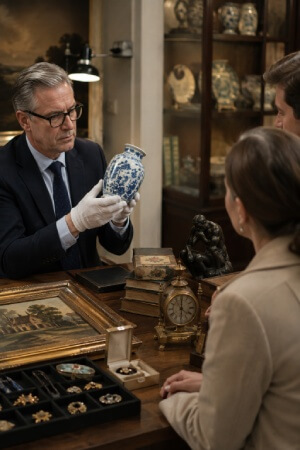
Auction houses can help sellers reach collectors and specialist buyers who may be difficult to find through an ordinary private sale. The likely result depends on the item’s condition, rarity, demand, presentation, and the audience attracted to the auction.
What Influences an Item’s Value
Valuation is based on more than appearance. Auction specialists may consider recent sales of comparable objects, current collector demand, age, origin, craftsmanship, condition, rarity, and provenance. Fashion also plays a role, as categories that were popular twenty years ago may attract less interest today. An estimate should therefore be treated as informed guidance rather than a promise of the final selling price.
Preparing Antiques and Collectibles for Sale
Sellers should gather receipts, certificates, old photographs, family records, and any other information connected to the item. Clear provenance can make an object easier to assess and more appealing to potential buyers. Cleaning should be approached carefully because aggressive polishing, repainting, or restoration may reduce value. In many cases, it is better to ask an auction specialist before making permanent changes to an antique surface or original finish.
Choosing the Right Auction House
A general auction may be suitable for ordinary household contents, while rare coins, jewellery, fine art, books, or classic toys may perform better in a specialist sale. Sellers should compare commission rates, insurance terms, photography charges, reserve policies, payment schedules, and collection arrangements. The auction house’s existing buyer network is also important, as the right audience can have a significant effect on competition and the final result.
Exploring Antiques and Collecting

Collecting often begins with curiosity rather than investment. Learning about materials, manufacturers, design periods, and historical context can make it easier to recognise meaningful objects and avoid costly mistakes.
Identifying Vintage and Antique Objects
Identification usually starts with close observation. Materials, construction techniques, screws, joints, stamps, labels, patterns, and signs of natural wear can all provide clues about when and where an item was made. Reference books, museum collections, auction archives, and specialist associations can support further research. One feature is rarely enough to confirm age, so conclusions should be based on several pieces of evidence rather than a single mark or family story.
Building a Thoughtful Collection
A good collection does not have to be large or expensive. It may focus on a particular designer, decade, material, subject, region, or type of object. Starting with a narrow area makes research more manageable and helps buyers recognise differences in quality. Keeping records of purchase dates, prices, dimensions, condition, and provenance also makes the collection easier to organise, insure, and eventually sell or pass on.
Caring for Antiques and Collectibles
Proper storage can protect both financial and sentimental value. Sunlight, humidity, heat, pests, dust, and unsuitable cleaning products may damage wood, paper, textiles, metal, ceramics, and painted surfaces. Fragile items should be handled as little as possible and stored using materials that will not react with them. Valuable objects may also require specialist insurance, secure display cases, or professional conservation advice.
Making Auctions Easier to Navigate
Auctions reward patience, research, and careful decision-making. Buyers should understand the full cost of bidding, inspect items closely, and avoid being carried away by competition. Sellers should provide accurate information, choose an appropriate auction house, and consider how presentation affects interest.
Whether the goal is to find a distinctive object, clear an estate, begin a collection, or learn more about antiques, understanding the process provides a stronger starting point. A well-informed approach cannot remove every risk, but it can make buying and selling at auction more transparent, practical, and enjoyable.